
Resource
How much does water damage restoration cost?
There is no single price for a water loss. This page explains what drives the cost, how the bill moves through your insurance claim, and what is usually covered.
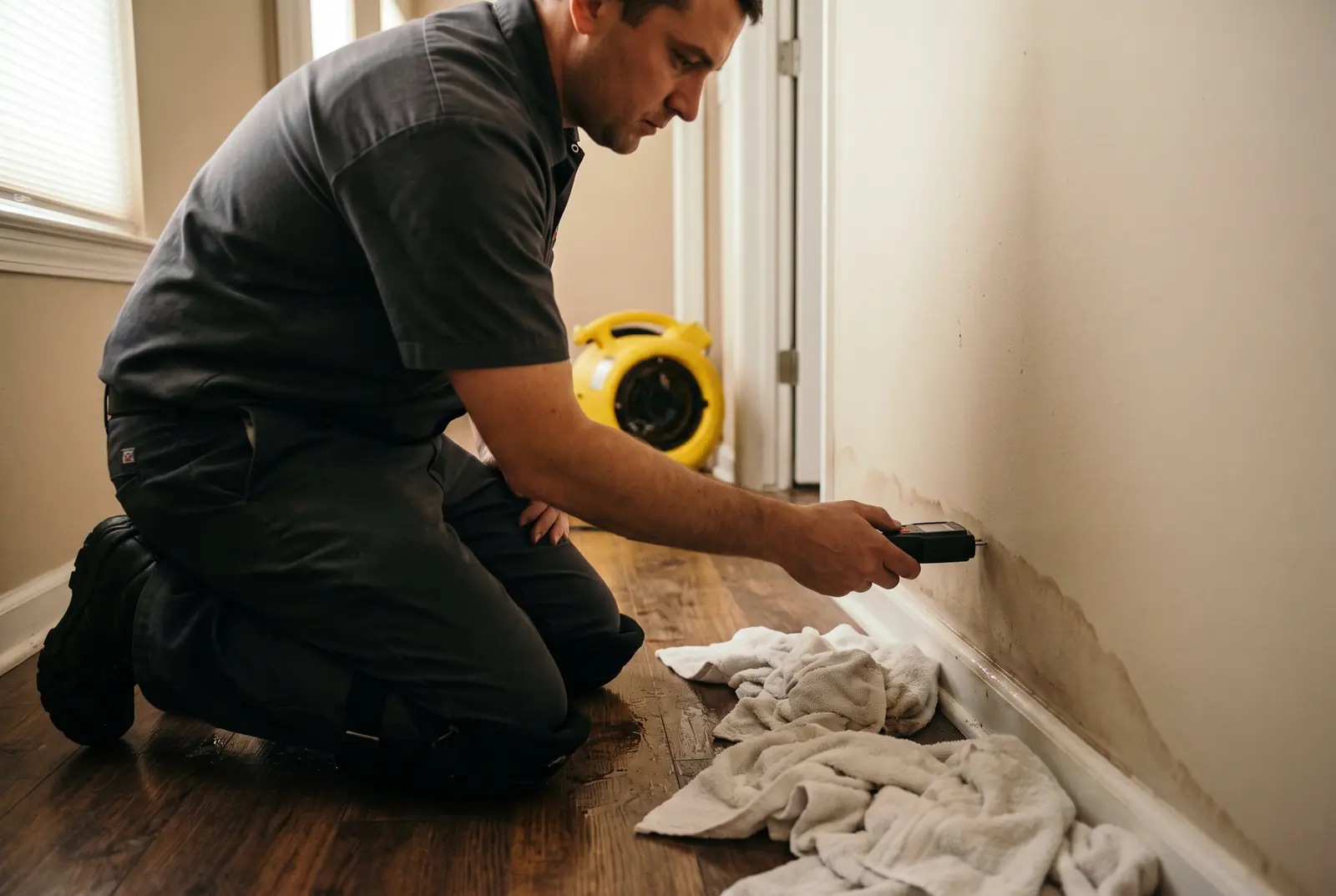
Why doesn't the company tell you how much it's going to cost?
Every water damage restoration job is different. Each is carefully scoped out line by line to ensure that no detail is missed.
It is very rare that a restoration job will be a flat price for a service. Rather, it is easier to provide a full scope of the job that the water damage restoration company intends to perform, and an itemized list of the cost of each line item. The end total of all these line items is based on a variety of different factors, as listed below. That is why a reputable contractor will not quote you a total over the phone before seeing the loss.
What does a water loss cost on average?
It can range anywhere from a couple of hundred dollars to five figures, and the type of water involved is the biggest reason why.
Clean water losses sit at the low end. Gray water losses cost more. Category 3 losses (sewage or floodwater) cost the most due to the significant amount of demolition that must be performed. Drywall replacement alone, including the cost of the flood cut, hanging, and finishing, is its own line item on top of the drying. Treat all of this as a rough frame, not a quote; the only real number is a written scope for your home.
What affects the cost of a water loss?
There are several factors that can affect the cost of a water loss.
As you may have noticed, we used the words Category and Class when describing the type of water lost. This comes from the IICRC (Institute of Inspection, Cleaning and Restoration Certification) S500 Standard for professional water damage restoration.
- Category of water. Category 1 is clean water from a water supply or appliance, Category 2 is gray water from sources such as washing machine overflows, and Category 3 is grossly contaminated water from sources such as sewage backups or rising flood water. The higher the category of water, the more demolition and disposal is needed due to the inability to dry certain porous materials in place.
- Class of water loss. Water losses are classified 1–4. Class 1 has low porosity and affects a small area of the building. Class 4 uses specialty drying methods to remove water from dense materials such as hardwood floors, plaster, and concrete.
- Square footage of loss. The more square footage affected, the more extraction, drying, and rebuild is necessary for the job. Water that crosses several rooms or drops to a lower floor multiplies the work.
- Type of materials that are affected. Different materials require different actions to restore. Carpet typically requires the pad and carpet to be removed and replaced. Drywall typically requires removal up to the water line and replacement of the affected drywall. Hardwood flooring, in many cases, can be dried in place by using specialty matting systems. Other materials that may need to be restored include cabinetry, tile, insulation, and more.
- Length of time the water sat. Drywall and wood are subject to wicking, which is the moving of water upward through the material. Additionally, after a couple of days, the loss is subject to microbial growth. If water sits in a location for a week, it may turn from a water loss to a mold job, in addition to the need for rebuilding.
- The amount of demolition and rebuild that is needed. If demolition is needed, this will require removal and disposal of the items, in addition to the reconstruction of the materials to bring the affected area back to the pre-loss condition.
- The number of days the equipment will be required. Equipment is billed per piece per day. Generally, residential water damage restoration jobs require 3–5 days of drying, but Class 4 jobs or dense building materials can require a longer drying time.
How is the water damage restoration bill written?
Generally, the restoration contractor will inspect the loss, perform a moisture inspection, and write out the scope of the job using industry software.
The contractor will use a moisture meter, thermal imaging, or both to calculate the square footage affected by the water. A reputable company will record the readings, photograph the rooms, and then input this information into Xactimate or a similar platform. You should always receive a copy of the scope that was submitted. The scope includes every task that the contractor will perform to repair the loss. These tasks are priced using a database specific to your region. The adjuster and contractor both have access to this platform. If an issue arises during the drying process the contractor will be able to write a supplement to include the new tasks rather than padding the original scope.
How does insurance billing work on a water claim?
The policyholder (you) will file a claim with your insurance carrier. The restoration contractor will send their scope of work to the insurance adjuster for review. Once the adjuster approves the scope of work, your insurance carrier will issue a payment less your deductible.
Most policyholders will assign their portion of the payment to the restoration contractor. This allows the insurance company to pay the contractor directly and the policyholder is only responsible for the deductible amount. If you do not assign the payment, the insurance company will pay you and you will be responsible for paying the restoration contractor. The deductible is the same regardless.
The insurance adjuster may question part of the scope. If this happens the contractor will send documentation to support the line items. This is why it is critical that the contractor does a good job documenting the loss. It will make it much easier for them to defend the scope and get it approved quickly. For a step-by-step look at the claim process, read how a water damage insurance claim works in Texas.
What does homeowners insurance usually cover?
Sudden and accidental water damage, usually. Typically, homeowners insurance will not cover long-term leaks, neglect, or flooding.
This is something you will need to read your own policy or call your insurance carrier to find out. In general though:
- Water damage caused by sudden events is usually covered. Pipe breaks, water heater failure, appliance failure, fixture overflow, and storm damage that lets rain in through a damaged roof are usually covered.
- Water damage caused by long-term leaks, neglect, seepage, or sewer backup (unless you carry an endorsement for it) is usually not covered.
- Flooding is not covered under a standard homeowners insurance policy. Flooding, including overflow of creeks, storm surge, etc., requires a separate policy that can usually be obtained through the National Flood Insurance Program.
If you have any questions about your policy you should contact your insurance carrier. A restoration contractor can tell you what the water did to your home and document it clearly, but cannot tell you what your policy will pay.
How do you get an accurate number for your home?
The only way to know how much it will cost to repair a water-damaged home is to have a contractor come out and write a scope.
Call Guardian. We will come out and give you a written scope that you can take to the adjuster before you commit to anything. If you have standing water in your house, call now. We will answer the phone.