
What happened
Water moves fast and hides well.
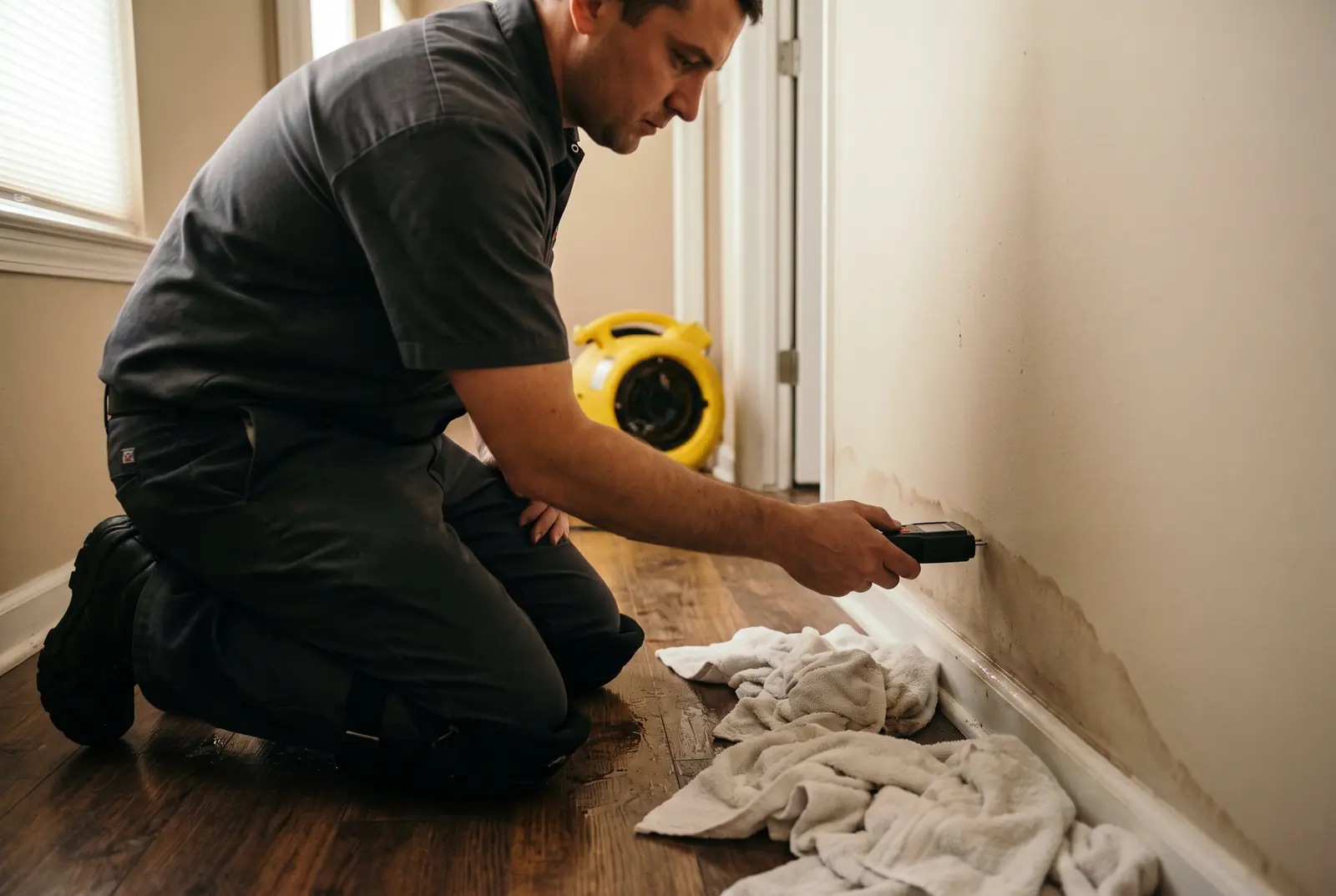
Within just a few hours, water wicks up your drywall, soaks into the insulation, and migrates under your flooring. Within a day or two, mold begins to grow on the back side of your drywall. The damage that you see on the surface is usually minimal compared to the damage that is happening inside your walls.
The longer the water sits in your home, the worse the damage gets, and the more expensive your restoration is going to be. That is why we offer 24/7 service and move quickly to remedy your water damage. Whether the water is from a burst or frozen pipe, slab leak, water heater or appliance failure, overflowing tub or toilet, roof leak, or from a storm that has flooded your home, Guardian will help you. And when the water damage is dried and your home is back to pre-loss condition, our crew performs any reconstruction that may be needed to finish the job. For fire and smoke damage restoration, please visit our Fire & Smoke Damage page.
Guardian uses the IICRC S500 Standard for Professional Water Damage Restoration in every water loss that we do. The S500 Standard categorizes water into 3 categories based on how clean or contaminated the water is. Depending on the category of water that your loss is, certain materials may need to be removed while other materials can be dried in place. We will advise you of the category of water on our first visit to your home.
What we do
From the first call to the last coat of paint.
Here is a general outline of what we do when fixing water damage.
-
Stop the source of the water, if possible.
Drying a floor while the leak keeps running gets you nowhere.
-
Remove standing water.
Remove standing water from carpet and hard-surface flooring using commercial-grade water extractors.
-
Remove what cannot be dried in place.
Perform a "flood cut" in drywall, remove insulation, remove carpet padding, and remove any other materials that cannot be dried in place.
-
Set up drying equipment.
Set up air movers and commercial dehumidifiers to dry the structure, placed based on moisture readings.
-
Monitor and document daily.
Monitor and document the drying process daily until the structure is completely dry, with a log your adjuster can use.
-
Rebuild the damage.
Rebuild the damage (replace drywall, paint, replace baseboard, replace flooring, etc.). Guardian can handle your water damage restoration from start to finish.
Right now
What should you do when you find water damage in your home?
- Turn off the water to your home if the source is inside and you can reach the valve safely. You don't want to make the problem any worse than it already is.
- If your electrical panel is not in the affected area, turn off the power to any areas that have water. If your electrical panel is affected by the water, leave it alone and let us deal with it.
- Remove items from the affected rooms: rugs, furniture, electronics, anything on the floor.
- Take pictures and videos of the damage for your insurance company before anything gets moved.
- Don't use your household vacuum to clean up the water. It will just make a bigger mess. Don't walk in the water if you think that it may be in contact with electricity or sewage.
- Don't begin tearing out your walls. We are trained to know where to open up the walls to allow for proper drying, and we will rebuild the walls when the job is done.
Why Guardian
What you can expect from us.
-
You get a straight answer.
You will always get a straight answer from us, and you will always know exactly what your invoice is going to look like when the job is done.
-
We respond fast, and we're available 24/7.
When you call, even at 3 a.m., somebody will pick up the phone, and we will get a crew out to you as soon as we can. Time is of the essence when it comes to water.
-
We fix the source of the problem.
There is no use in drying something out if the leak is still going on.
-
We do quality work.
Not only will we dry out your house, but we will also rebuild the damage, and we stand behind our work. Meet the people who own the work.
Questions
Frequently asked questions about water damage
Didn't find the answer you were looking for? Call or send us an email. Read more: the first-hour water damage checklist.
How long will it take to dry the water damage?
In most cases, it takes about 3–5 days to completely dry water damage. If the home was heavily flooded, if there is hardwood floor in the home, or if the water was present for several days before remediation, the drying process may take a bit longer. When we are doing the drying, we take moisture readings from the structure every day, and when the readings are back to normal, the drying equipment can be removed.
Does my insurance cover water damage?
Water damage that occurs suddenly and unexpectedly is usually covered by your insurance company. Water damage from long-term leaks and from flooding is usually not covered. When we come out to your home, we take pictures, moisture readings, and other documentation to help your insurance adjuster determine what materials need to be removed and what materials can be dried in place. We are more than happy to work with you and your insurance company to get your home dried and repaired.
Can I stay in my house while you are drying the water damage?
In most cases, you can stay in your home while the drying is being done. If there is contaminated water from a sewage leak, if your electrical panels have been affected by the water, or if a large portion of your home has water damage, it may be best for you to find alternative housing for the time that it takes to get your home dried and repaired.
Water in your home? Don't wait.
The longer it sits, the worse it gets. If your home has water damage, please call us now for assistance.
(512) 884-4238 Call Guardian NowOpen 24 hours · Serving Round Rock and the Austin area