
Resource
What to do after a house fire in the first 24–48 hours
So the fire is out and the fire trucks are gone. Now what? Here is what to do, what not to touch, and what to ask, in the order it matters.
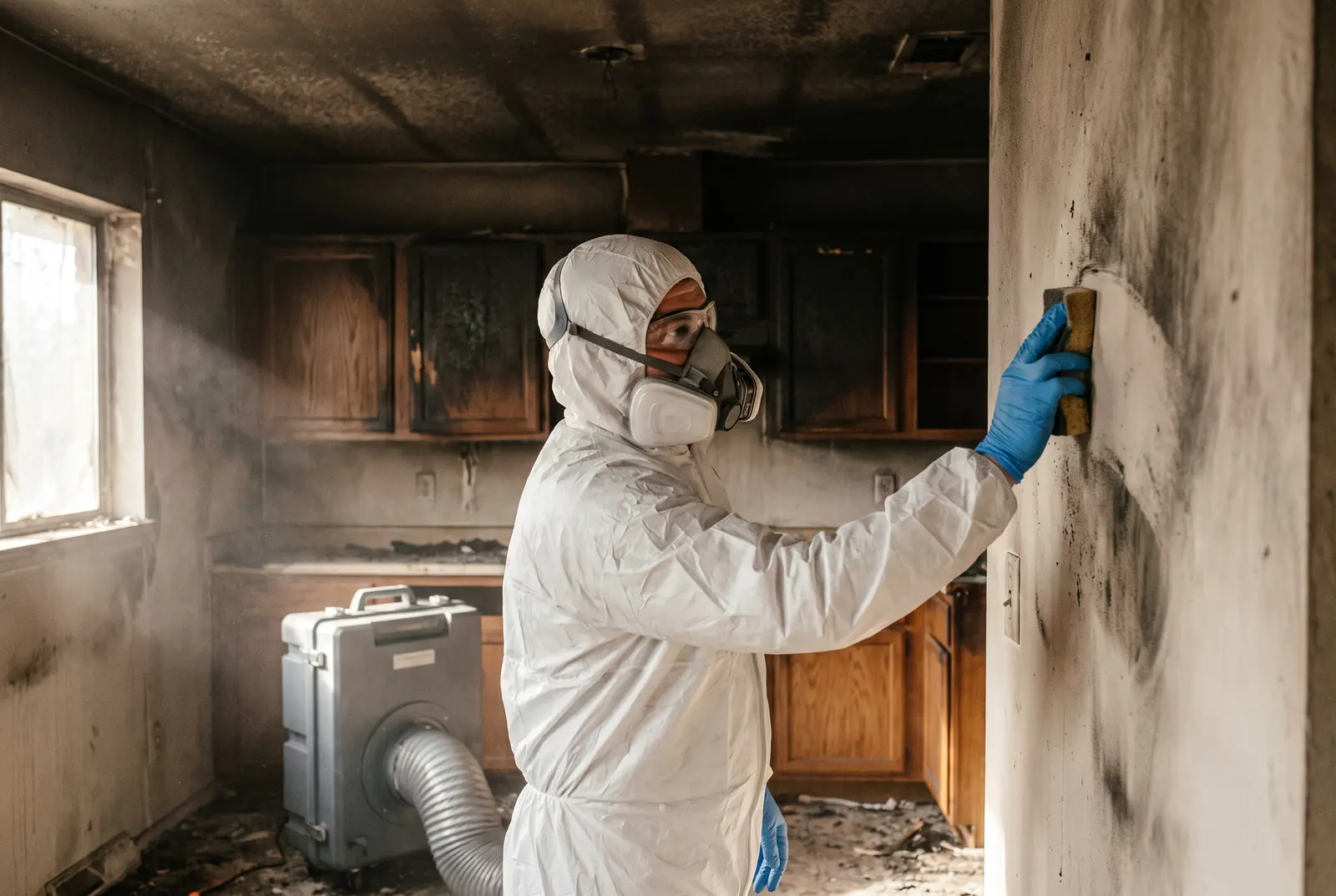
When is it safe to go back in the house after a fire?
Don't re-enter your home until the fire department says it's safe to do so.
Fires cause structural damage that is unseen to the untrained eye. Even if the fire was small, the integrity of the framing, flooring, or roof decking might be compromised. Or gas lines and electrical wiring may be damaged. Once cleared by the fire department, go back in during the day, and wear a mask and gloves. It's best to not go back in with children or pets, and to keep the amount of time you are in the structure to a minimum.
Make arrangements for where you are going to stay for the time being. Whether it be with friends, family, or a hotel, you need to have somewhere to stay tonight, and make sure to save all receipts for all your expenses starting now. Those receipts matter in the next step.
When should we call the insurance company after a fire?
Call your insurance company the same day, or the next morning at the latest. Opening the claim early starts the clock on your adjuster, your coverage, and your temporary housing.
Have your policy number ready, if you can find it, but don't delay the call if you can't. Tell them the date and time of the fire, and how it started if you know. Let them know if your house is in a livable condition or not. Here are some questions you should ask, and write down the answers:
- Do we have additional living expense (ALE) coverage, or loss of use coverage, that will cover the expenses of finding a place to live while our house is unlivable? If so, how much coverage do we have and how do I submit receipts?
- Who will be our adjuster and when will they come out? What's their direct number?
- What do you need from us before we can start cleaning up? Most insurance companies want to take pictures first or see the damage before anything is done.
- Do you need us to secure the property? If your house has open windows or doors, you need to consider having the house boarded up, or the roof tarped if the shingles have burned through. Most insurance policies have a clause that requires you to secure the house from further damage, and your policy might even cover the expense of boarding up or tarping the roof.
After the call to the insurance company, the process from here is almost identical to a water claim. Check out our guide on how to file a water damage insurance claim in Texas for more details on the process. The insurance company has the same deadlines on fire claims that Texas state law sets for water claims.
What should we photograph before we start cleaning up after a fire?
Everything. Take pictures and video before you do anything.
Walk through your house slowly with your cell phone and take pictures and video of everything. Shoot wide first, then close. Open cabinets and closets. Capture the ceiling, the floor, and the inside of appliances. If something is too damaged to recognize, photograph it anyway and note what it was.
Make a list as you walk through: item, approximate age, and what you paid if you remember. This will be a huge help later when you have to make a contents list, and it's far easier to build while the items are still in front of you than from memory weeks later.
What should we not do after a fire?
Don't wipe any soot off, don't turn anything on, and don't eat anything that has been exposed to heat, smoke, or soot.
Don't wipe soot off anything until the restoration crew has had a chance to look at it. Soot is very much like grease, and if you wipe it off with something that contains water, it can set in and cause permanent staining.
Don't turn anything on. Soot is conductive and can corrupt circuit boards in electronics and appliances. Have everything, from TVs to refrigerators to washers, checked before turning them on.
Don't turn on any fans or air systems that might spread soot to other parts of the house that didn't get any soot in them.
Food: You will need to discard all food, even closed cans and jars, if they were near the fire and exposed to heat, smoke, or soot. You will also need to empty your refrigerator and freezer if you lost power.
Medicine and cosmetics: You will also need to discard these, as the heat will alter their chemistry and they can become contaminated by soot.
What do we do about all of the water?
Hundreds of gallons of water were likely used to put out the fire. This water has soaked into your drywall, insulation, and framing, and it will begin to promote mold growth within a couple of days.
This is not water you can clean up with a mop, and it is not water you can dry out by opening the windows. You will need a professional restoration crew with moisture meters to identify all of the wet materials, water extraction equipment to remove the standing water, and drying equipment to dry out your structure. The good news is that Guardian is experienced at handling both aspects of the job, the fire and the water, so you won't have to worry about finding someone else to help you with drying out your home. We treat the water as its own water damage job inside the fire job, so drying starts while the soot and smoke work is being planned.
Soot and smoke odor will not go away on their own. The odor is coming from the residue the smoke left behind in your home. While airing out your home may help a little bit, the odor will not leave until the soot residue has been removed and the proper equipment is used to deodorize the residue that has soaked into the porous material and cavities of your home. Candles and sprays mask it for an afternoon. This is the job of fire and smoke restoration professionals, and it is a job Guardian specializes in. Whether you need soot removal, smoke cleanup, or odor removal, or you need to dry out the water that was used to put out the fire, Guardian can help. We will get your home back to normal as quickly as possible.
What items can be cleaned? When will we rebuild our house?
Hard, non-porous items can usually be cleaned. Porous, charred items cannot usually be cleaned. Once the structure of your home has been cleaned and dried out, and your adjuster gives you the okay, we will begin to reconstruct your home.
Items that can usually be cleaned: Metal, glass, ceramic, sealed hardwood furniture, some hard plastics, clothing, and other washable fabrics that are not scorched.
Items that cannot usually be cleaned: Mattresses, pillows, upholstered furniture that absorbed heavy smoke, particleboard, paper goods, and anything that is charred or melted. Porous items will hold the odor no matter how much you try to clean them.
Items you should ask us about before discarding: Electronics, artwork, photographs, and heirlooms. Please don't discard these before talking to the restoration professionals.
Documents you should replace at this time: Passports, birth certificates, Social Security cards, car titles, boat titles, insurance policies, etc. These are all things you can get replaced, and starting now avoids delays later in the claim.
After the cleaning is done and the structure is dried out, we can finalize the scope of work with your insurance company and begin the reconstruction. This can include framing, hanging new drywall, painting, installing new floors, installing new cabinets, and finishing out your home the way you like it. Guardian can do it all, so you don't have to worry about finding a contractor. If you have any questions about what to do after a fire, please feel free to call us and we will do our best to answer them for you.