
Resource
Mold vs. mildew: how to tell the difference and when it matters
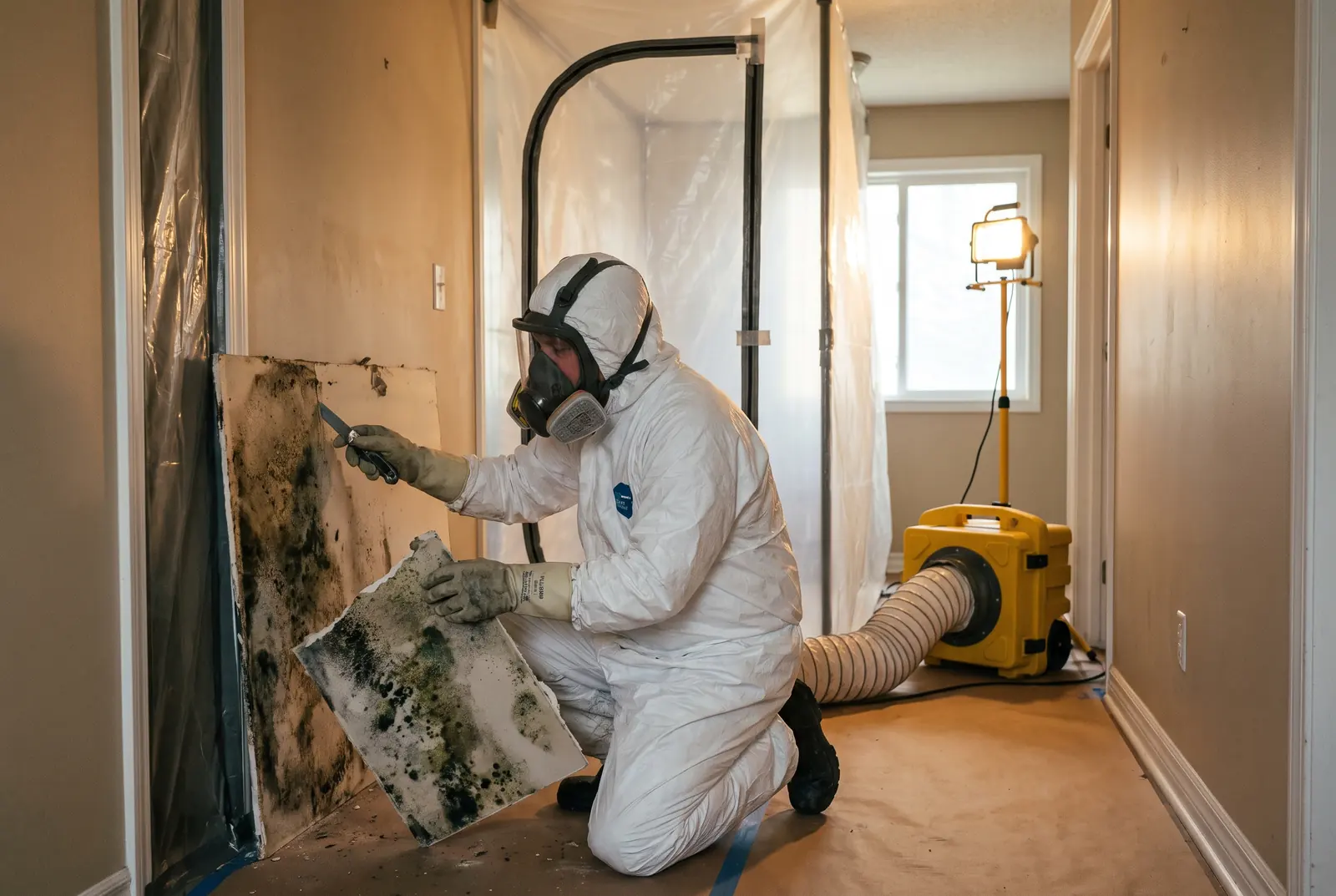
Mold and mildew are very different, from a severity standpoint. Mildew is mild and easy to remove; mold is a sign of an underlying moisture problem and can penetrate deep into drywall, wood, and other surfaces in your home.
What exactly is the difference between mold and mildew?
Mildew is actually a type of mold. It's flat, usually gray or white, and tends to be powdery. Other types of mold are fuzzier or slimy in texture, and are often black, green, or brown.
Mildew can occur in any moist area of your home: along the grout or on the walls of your shower, on your kitchen sink, around your windowsills, etc. It's mostly harmless, stays on the surface of whatever it's growing on, and is easily wiped off with little chance of leaving a stain.
Mold, on the other hand, tends to be raised, fuzzy or slick, and can be a variety of different colors. Its color isn't really a good indicator of what type of mold it may be, but you can usually tell it's mold by smell. If you walk into a room and it has a musty or earthy smell that doesn't go away even after the room has had time to air out, it's probably a mold issue, even if you can't see it yet.
Mold feeds off of what it's growing on, so if it's growing on a porous surface (drywall, wood framing, carpet, insulation, etc.), it's almost certainly going to have penetrated into that surface.
Is there a way to tell if a spot in my house is mold or mildew?
There is a way to get a rough idea of whether what you're seeing is mold or mildew. Apply a small drop of bleach to the spot. If it's mildew, the spot should lighten in color after a minute or two. Mold usually won't lighten in color.
Put on some gloves and take a cotton swab, dip it in some diluted bleach, and dab it on the spot you're concerned about. If it lightens, it's probably mildew. If the spot stays dark, or if the surface appears to be pitted when you look closely, you're probably dealing with mold.
Keep in mind that bleach doesn't kill mold that has penetrated into a porous surface, and the EPA doesn't recommend using bleach or other biocides as a routine way to clean up a mold problem, so if what you're looking at is growing on a porous surface, you should probably just skip this step and keep reading.
When do I need to worry about the difference between mold and mildew?
You should start worrying about the difference between mold and mildew if you see a large area of growth, if you've cleaned an area and it keeps coming back, or if what you're looking at is on a porous surface rather than a non-porous surface like tile. You should also be concerned if anyone in your household is sensitive to mold.
- How large of an area is affected? If it's an area the size of a dinner plate or larger, or there are multiple areas of growth, you may have a bigger issue on your hands.
- Have you cleaned this area in the past and found the problem to recur? If you clean a spot in your shower and it never comes back, you've probably got harmless mildew. If it keeps coming back in the same place, you have a moisture issue somewhere you haven't found.
- Is the growth on a porous or non-porous surface? If it's on a non-porous surface like tile, glass, or sealed stone, you might just have mildew. If it's on a porous surface like drywall, wood, carpet, ceiling tile, or insulation, you're probably dealing with mold.
- Are there sensitive individuals in your household? Infants, elderly family members, and anyone with a weakened immune system, asthma, or allergies may be sensitive to mold in your home. If someone feels better when they leave your house, take that seriously.
Why is mold always a moisture problem first?
Mold needs moisture to survive, so if you have a mold problem, you have a moisture problem. You'll need to solve the moisture problem to solve the mold problem.
Mold spores are everywhere, and they're dormant until they come into contact with moisture. Then, within 24–48 hours, mold can start to grow. That's why mold shows up after a water event even when the surface looked dry the next day.
Common sources of moisture in the average home include slow leaks under sinks or from your roof or windows, and prior water damage that wasn't dried out completely (leaving the wood framing damp behind your finished walls). Poor air circulation in certain rooms of your house leads to condensation, and showers and bathrooms without adequate exhaust fans stay damp.
This is why Guardian treats mold as a water problem first. Mold cleanup should always start with finding and fixing the source of moisture. We need to dry out the structure, which takes a few days; our guide on how long water damage restoration takes walks through that timeline.
What can I do myself, and when should I call in the pros?
You can clean off mildew that has grown on the surface of hard materials in your home like tile, grout, glass, and around the tub.
Put on some gloves, turn on the fan, spray it off with detergent and water or bathroom cleaner, and make sure the area is dried off when you are done. You should also consider how to reduce moisture in the room by running the fan after a shower, squeegeeing off the shower, or opening a window.
Do not clean or disturb mold in the following situations:
- Mold growth that affects more than a few square feet, or is present in more than one room in your home.
- Mold that has grown on drywall, wood framing, insulation, carpet, or ceiling material. Do not attempt to scrub this off; you will spread spores and not get to the mold growing inside the material.
- Mold growth related to a flooding event, sewage backup, or leak that has gone on for a few days. Even if you can't see it, the materials inside your walls are wet and you will need professional help to dry them out.
- Mold that you can smell, but can't see.
In the situations above, do not turn on a fan to "dry it out." Close the door to the room, and call us. We will be happy to help you with mold cleanup and moisture repair. That means finding the source of moisture and drying out the structure, removing any materials that can't be dried or cleaned, and cleaning the affected areas.
What does the "25 square foot rule" mean in Texas?
In Texas, if you have 25 or more contiguous square feet of mold on any surface, you must hire a Texas Department of Licensing and Regulation licensed mold remediation contractor to do the remediation.
Texas also requires that a licensed mold assessor write the mold remediation protocol for the contractor to follow, and that notice be given to the Texas Department of Licensing and Regulation before the remediation begins. Guardian does not do the mold remediation ourselves, but we can help you with your mold issue by working with a licensed mold remediation contractor to get it done. We will find any water issues that may be causing the mold and get your structure dried out, we will coordinate the remediation with the licensed contractor, and then we will rebuild your house after the contractor has cleared it. If you think you have a mold issue, send us a picture of what you are seeing or give us a call and we can tell you what you are looking at.